
By: Miss Khadija Abbasi
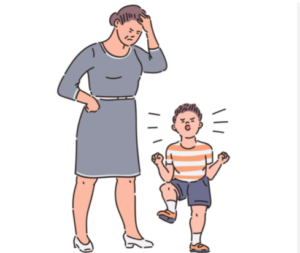
Conduct disorders are serious, disruptive behavior patterns which are often hard to control. These behaviors violate the age-appropriate norms and the rights of others. Unlike occasional bad behavior, it is very persistence and disrupts the child’s or family’s everyday life. A child could show aggression, destruction and deceitfulness at home and school. Conduct Disorder is part of the “Disruptive Impulse Control & Conduct Disorders” section in the DSM-5. It is common among children and adolescents and its onset usually occurs in late childhood or in the early adolescent years. However if it remains persistent during the teen period, it can leads to Antisocial Personality Disorder in adulthood. Its prognosis depends upon the age of onset the time of seeking professional help. Pharmacotherapy and behavioral therapy are the practical interventions for the management of children with conduct disorder.
SYMPTOMS OF CONDUCT DISORDER
Children with conduct disorder act without taking into count the feelings of other people and
without considering the consequences of their actions. The symptoms of conduct disorder are divided in four categories:
1. Aggression to People and Animals: such as fighting, using a weapon, cruelty to
animals, bullying or forcing someone into sexual activity etc.
2. Destruction of Property: such as engaging in fire setting or destroying others’ property
etc.
3. Deceitfulness or Theft: may include shoplifting, lying or forgery etc.
4. Serious Violations of Rules: such as running away from school or home and using drug
or alcohol etc.
PREVALENCE OF CONDUCT DISORDER
The symptoms of conduct disorder are the common primary presenting problems among the children for psychiatric referral. In United States, the overall prevalence of conduct disorder was recorded 9.5%, however the worldwide estimated prevalence among children and adolescents is 3.2%. Conduct disorder is more common in boys than girls, however the presentation of symptoms is different in both genders, boys with conduct disorder shows aggressive symptoms whereas girls are more likely to exhibit lying, truancy and rule-violating behaviors. The onset of conduct disorder can be before 10 years or in adolescent period, children with early onset have usually poor prognosis and they are at the high risk of criminality in adolescence and later in adulthood. The current research suggest that about 25-40% of youth with conduct disorder reach to the
diagnosis of antisocial personality disorder.
CAUSES OF CONDUCT DISORDER
There are several underlying mechanisms which are involved in the development of conduct
disorder. These factors serve as foundational building blocks, evidence from researches suggest that environmental, psychological, social and biological factors play a significant role.
Environmental factors:
- Parental conflicts/ divorce
- Domestic violence
- Parental alcohol or drug abuse
- Inadequate supervision and unpredictable discipline practices of parents/ family
Large family size - Insecure ambivalent attachment patterns such as harsh and abusive parenting
Psychological factors:
- Child abuse or neglect
- Lack of guilt and remorse
- Having attention seeking tendencies
- Deficit in cognitive processing (learning disabilities)
Social factors:
- Poverty at home
- Peer rejection
- Modeling of someone’s delinquent behavior, either in family or in friends
- Peer’s admiration on showing delinquent behaviors
Biological factors:
- Cell circuits in the neural pathways that connect frontal lobe regions
- First degree relative with mental illness such as mood disorders, substance use disorder or aggressive traits
ASSESSMENT AND DIAGNOSIS OF CONDUCT DISORDER
For assessment and diagnosis, a mental health professional considers the age, gender, and family environment of the child. Specific interview tools are designed to evaluate a child for a mental disorder. A psychiatrist/psychologist observes the child’s attitudes and behavior and formal assessment tools are administered to report the explanation of the diagnosis. Following measures can be used for the assessment of children with conduct disorder:
- WISC-III is used to assess verbal, performance and full scale IQ
- CAT/TAT can be used to assess the hidden thoughts, wishes and conflicts
- Child Behavioral Checklist is used to assess the behavioral problems of the child
- Means-End Problem-Solving Procedure
- Novaco Anger Inventory
- Adolescent Antisocial Behavior Checklist
The diagnosis is made on the bases of the reports from child’s parents, teachers, and other adults with child. Clinician clarifies the differential diagnosis of conduct disorder including mood disorder, oppositional defiant disorder (OD), intermittent explosive disorder and attention-deficit/hyperactivity disorder (ADHD).
BEHAVIORAL INTERVENTION PROCEDURES FOR CONDUCT DISORDER
Children learn most of the disruptive behaviors from school and reinforced by the appreciation of their peers. For treatment, teachers from school need to be on board with parents. Mostly the parental treatment fails to modify the behavior because school environment is favorable for the child, so make sure that both (parents and teachers) are following same management strategies, only then the modification will be effective.
Firstly keenly monitor your child and make a list of his problem behaviors. Now follow the
given guideline, the child symptoms may get burst when you start the modification techniques but stay consistent, gradually it will bring a change.
Antecedent Strategies
- Attention is usually a function of child’s behavior, so parents should pay much attention to only good behaviors of the child. To give positive attention, encourage your child to share his feeling and problems with you by spending quality time and direct him to the solutions. While teaching discipline, soften your tone; appreciate his every step towards betterment by physical touch (i.e. hugging, cuddling or patting).
- Praise given to child should be very descriptive and frequent. For example, if child is working without any disruption, the parents/teacher may say, “Dear, I like the way you are sitting quietly and doing your work”. In order to increase the number of positive comments, parents/teacher may want to keep track of their positive comments.
- Parents/teachers should not allow child to benefit from escaping the given task. Escape is a potential function of behavior; thus, child may display inappropriate behavior in order to leave the classroom or any given task at home. So use pre-correction strategies to remind child of his expectations during unstructured time and whenever possible try to model the appropriate behavior in front of the child.
Instructional Strategies
- Teachers working with child should consistently set contingencies in order to help him to increase his rate of work completion, as escape from non-preferred tasks is one of the functions of his problem behavior. For example, in his Reading or Mathematics class, if the teacher gives him an assignment, she can establish a set amount of time (preferably on a clock that child can watch but will not disrupt the other students in class) and let him know that if he finishes his work in the allotted amount of time, he will earn a specific reinforcer (e.g., break for playing). These contingencies may be set informally for specific assignments, or a ‘formal behavioral contract’ may be drafted that would apply to all assignments. These contingencies should be used in all classrooms in which child is enrolled. Similarly parents should do the same thing at home, set specific targets for the child, i.e. if you will behave nicely today I will give you a chocolate or some time to play video game. By this way the child will develop the sense of earning. Also for warnings follow the same rule, for example you may say, if you will harm/steal any property then I will not give you single penny, will take away your all toys/gadgets, will not let you go out with your friends for playing, or any other weak point of the child.
- Child may benefit from help in developing positive social skills. The further development of his social skills will enable him to cope with difficult situations in other ways than displaying disruptive behavior and bothering other students to gain attention. It is suggested that teach him to communicate his emotions, needs, desires, and ideas in appropriate ways, rather than showing aggression. As parents and teacher, talk to him every day and make generous use of words like ‘please,’ ‘let’s,’ ‘thank you,’ etc. These curricula consisting of daily activities, do not take long time, and are perceived as enjoyable activities by the child.
If the problem behavior occurs, the following procedures should be utilized:
1. Try to ignore the behavior whenever child is displaying inappropriate vocalizations,
aggression or other disruptive behaviors. Do not let the child to disrupt the
home/classroom environment. Parents/teacher should carry on with their tasks.
2. Delay responding to child’s inappropriate behavior, unless it is dangerous or destructive.
3. If the problem behavior continues then provide an instruction to behave nicely and do your work, make your instruction more specific to the child. For example, a teacher may say “let’s focus on the lecture now” and a mother may say “this is not a good don’t do this, come with me in the kitchen”.
4. After giving specific instructions, allow a wait period (a couple of minutes). If child
performs the desired behavior, provide lots of praise. Like, “Good job, Umer is a good
boy”.
5. If child does not follow the direction, then provide a warning. Warnings should be given in an “If-Then” format (e.g. “Umer, if you do not stop it, then I’ll not allow you to play video game (cut short your break if at school) or other above mentioned warnings.
6. Allow another wait period (a couple of minutes). If child performs the behavior then
provide lots of praise.
7. If child does not follow the instruction then despite of yelling or beating, separate him from preferred activity to a dull and boring but nor scary or dangerous place (e.g., a corner of the room or an unpadded chair) now practically act upon warnings you gave him. Tell him know why he is getting this consequence in a short sentence; he must know the cost of his behavior.
Additional Recommendations:
Parents should not let the child to play violent/fighting video games and don’t give him mobile
phone to use. Never employ physical punishment because it will make him more stubborn.
Establish greater communication with the child’s school; using a school note on a daily or
weekly basis may do exactly this. The note can report child’s behavior performance for each
class throughout the day and can be used to earn reinforcers (rewards) in the home environment.